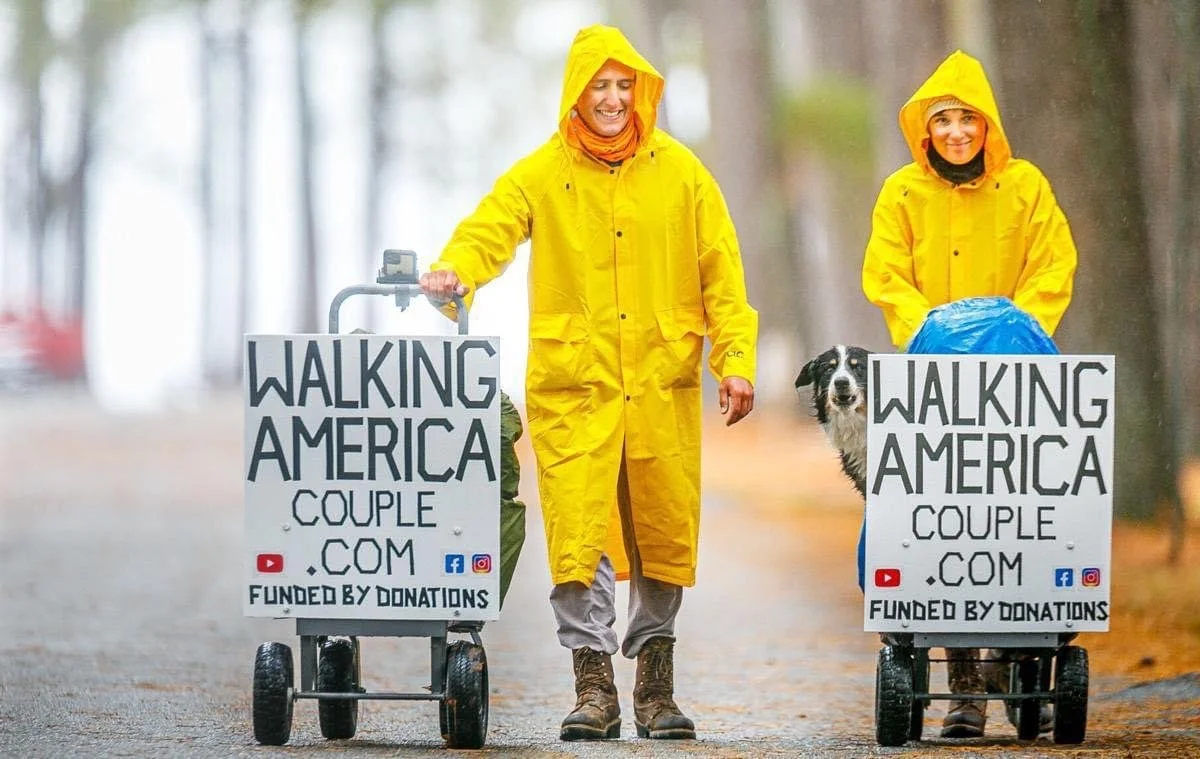
#7. Adventure
Because life is short, and the world is enormous. We want to experience the raw, unscripted beauty of what life can be—to wake up to unfamiliar skies and let wonder pave the path.
#6. To Challenge Ourselves
Growth doesn’t happen through comfort but difficulty. Every mile is a chance to push our limits—mentally and physically—and to become more resilient, more aware, and more in flow with the process.
#5. To See the World for What It Really Is
Not filtered through headlines or screens, but face to face. We want to understand people not as they’re portrayed, but as they live and breathe, from quaint little towns to vibrant cities.
#4. To Show the World for What It Really Is
Through storytelling, filming, and conversation, we’re able to share honest glimpses of humanity—its beauty, its contradictions, its heart. Not through the narratives of the media, or the most attention grabbing filter bubble, but through direct experience.
#3. To Connect with People
Every person carries a piece of the greater whole. We get to listen and learn about people from every walk of life—remembering that understanding begins with openness, and that most divisions vanish when we sit down eye to eye.
#2. To Help People Train a Different Mindset
One that questions its own biases. One that pauses before reacting. One that looks for the positive and regulates what it consumes. Most minds are conditioned to confirm what they already believe, but we want to model a different orientation—one that assumes it might be wrong, that sees opposing views not as threats but as chances to see more clearly. We’ve been shaped by a culture that rewards certainty and speed, conditioning us toward opinion and identity—but we’re trading that for tranquility, for humility, and for the kind of curiosity that softens judgment and opens hearts.
But the #1 reason for The Walk? To Make the World a Better Place
By embodying a different way of being. A better world isn’t built through force, but through the slow reformation of how people think, relate, and see themselves within the whole. If we can learn to walk with awareness—to walk alongside others instead of against them, through conflict, through difference, and discomfort—then maybe others will remember: the change we want doesn’t come from winning, but from learning to accept our enlivening differences. In reality, we’re not just walking across America. We’re trying to make ourselves into the kind of people who inspire others and leave it better than we found it—by the way we see, the way we speak, and the walk we walk.